Fire Alarm Maintenance: A Business Guide for Cardiff & South Wales
Practical fire alarm maintenance tips for Cardiff businesses — covering legal duties, BS 5839 compliance, service schedules, and what to expect from a professional inspection.
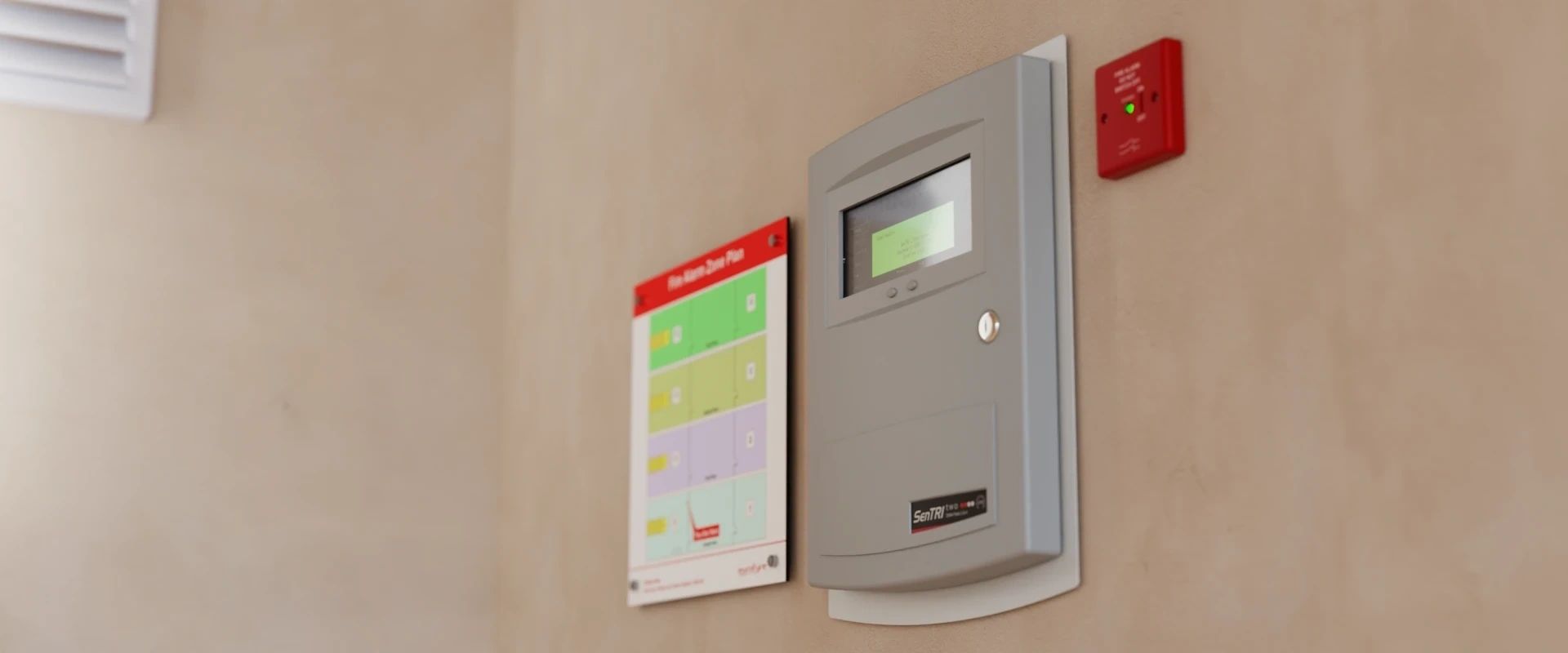
Your fire alarm system is only as reliable as the maintenance behind it. A panel that hasn't been serviced in 18 months, a detector clogged with dust, or a battery that's quietly failing — none of these announce themselves until the moment you need the system most.
For businesses across Cardiff and South Wales, keeping your fire alarm in peak condition isn't just good practice. It's a legal requirement, an insurance obligation, and a fundamental duty of care to everyone on your premises.
This guide covers everything you need to know: what the law requires, how often your system needs attention, what a professional service actually involves, and the simple checks your staff can carry out between visits.
What the Law Requires
The Regulatory Reform (Fire Safety) Order 2005 places a clear duty on the "responsible person" — typically the business owner, employer, or building manager — to ensure that fire detection and alarm systems are properly maintained.
This means your system must be:
- Kept in efficient working order at all times
- Tested regularly to confirm it functions correctly
- Serviced by a competent person at appropriate intervals
- Documented — with a logbook recording all tests, faults, and service visits
Failure to comply can result in enforcement notices, unlimited fines, or in serious cases, prosecution. More importantly, an unmaintained system puts lives at risk.
Your insurer will also typically require evidence of regular servicing. A fire loss claim on a system that hasn't been maintained to the required standard can — and often does — result in a refused or reduced payout.
The British Standard: BS 5839-1
The benchmark for fire detection and alarm systems in the UK is BS 5839-1. This standard sets out the design, installation, commissioning, and — critically — the maintenance requirements for fire alarm systems in non-domestic premises.
Under BS 5839-1, the recommended maintenance schedule is:
| Activity | Frequency |
|---|---|
| Weekly test (manual call point activation) | Weekly |
| Full system inspection and service | Every 6 months |
| Battery and standby power check | Every 6 months |
| Detector sensitivity testing | Annually (or per manufacturer guidance) |
Many insurers and fire risk assessors will ask to see evidence that your system is being maintained in line with this standard. A reputable fire alarm company will service your system to BS 5839-1 and provide a written service report after every visit.
Your Weekly Testing Routine
Weekly testing is something your own staff can — and should — carry out. It takes less than five minutes and gives you early warning of any developing faults.
How to carry out a weekly test:
- Notify staff before you begin so they're not alarmed
- Activate a manual call point (break-glass unit) — rotate through different call points each week rather than always using the same one
- Confirm the alarm sounds throughout the building
- Check the control panel shows the correct zone in alarm
- Reset the panel and log the test in your fire alarm logbook, noting the date, time, call point used, and the name of the person who carried out the test
If the alarm fails to sound, the panel shows a fault, or the system doesn't reset cleanly — contact your fire alarm engineer. Don't wait until the next scheduled service.
What a Professional Service Covers
A six-monthly service by a qualified engineer goes well beyond a simple test. Here's what a thorough inspection should include:
Visual Inspection
Every detector, call point, sounder, and beacon is visually checked for damage, obstruction, or signs of tampering. Detectors that have been painted over, covered with bags, or positioned too close to air conditioning vents are flagged and corrected.
Functional Testing
Each detector is individually tested — smoke detectors using an aerosol test agent, heat detectors using a heat gun — to confirm they respond correctly and trigger the right zone on the panel.
Control Panel Check
The engineer checks the panel for any logged faults, reviews the event history, tests the battery backup under load, and confirms the panel is communicating correctly with any remote monitoring or alarm receiving centre (ARC).
Sounder and Beacon Testing
Every sounder and visual alarm device (VAD/beacon) is tested to confirm it activates and that sound levels are adequate throughout the building — including areas that may have been reconfigured since the last visit.
Standby Power
Battery backup is tested to confirm it can sustain the system for the required duration (typically 24 hours in standby, 30 minutes in full alarm) in the event of a mains power failure.
Service Report
At the end of the visit, you should receive a written service report detailing every test carried out, any defects found, and recommended remedial actions. This report forms part of your fire safety documentation and should be kept on site.
Common Maintenance Issues We Find in Cardiff Businesses
In our experience servicing fire alarm systems across Cardiff, Penarth, Barry, Newport, and the wider South Wales area, these are the faults we encounter most frequently:
Detectors contaminated by dust or grease — particularly in kitchens, workshops, and older buildings. Contaminated detectors either fail to respond or generate persistent false alarms.
Flat or degraded batteries — standby batteries have a typical lifespan of three to five years. Many businesses aren't aware their battery needs replacing until it fails a load test during a service.
Unchecked fault logs — panels that have been showing a fault for weeks or months, often because staff assumed someone else had reported it.
Missing or incomplete logbooks — a common issue during fire risk assessments and insurance reviews. If you can't demonstrate your system has been tested and serviced, you may as well not have done it.
Detectors in the wrong location — systems that were installed years ago and haven't been reviewed following building alterations, new partitions, or changes in occupancy.
Choosing the Right Fire Alarm Maintenance Company
Not all fire alarm companies are equal. When selecting a maintenance provider for your Cardiff or South Wales business, look for:
- SSAIB or NSI accreditation — these are the recognised third-party certification bodies for fire and security companies in the UK. Accredited companies are audited regularly against industry standards.
- Experience with your system type — whether you have a conventional, addressable, or wireless system, your engineer should be familiar with the specific panel manufacturer.
- Clear documentation — a professional company will always provide a written service report and update your logbook.
- Responsive support — faults don't always happen during business hours. Check that your provider offers emergency call-out cover.
MH Fire & Security is SSAIB-accredited and has been maintaining fire alarm systems across Cardiff and South Wales for over a decade. We service all major panel types and provide 24/7 emergency support for our contract customers.
Simple Checks Between Service Visits
In addition to your weekly test, there are a few straightforward checks your staff can carry out to keep on top of the system between professional visits:
- Keep the logbook up to date — record every weekly test, every fault, and every engineer visit
- Check the panel daily — a green "normal" light means all is well; any fault or alarm indicator should be investigated promptly
- Keep detectors clear — ensure nothing is stored directly beneath or adjacent to detectors, and that they haven't been covered or painted over
- Report false alarms — a detector that keeps triggering without cause may be contaminated, incorrectly positioned, or failing; log it and report it to your engineer
- Review after building changes — any alteration to the layout, use, or occupancy of your building should prompt a review of your fire alarm coverage
When to Consider a System Upgrade
Regular maintenance extends the life of a well-installed system, but there comes a point where an upgrade is the more cost-effective and reliable option. Consider a review if:
- Your system is more than 15 years old
- You're experiencing frequent false alarms that can't be resolved through maintenance
- Your building has been significantly altered since the system was installed
- Your current system doesn't meet the category required by your fire risk assessment
- You're moving to new premises and inheriting an unknown or undocumented system
A new addressable fire alarm system gives you precise fault and alarm location, easier maintenance, and a platform that can grow with your business.
Get Your Fire Alarm Serviced by MH Fire & Security
Keeping your fire alarm system compliant and reliable doesn't have to be complicated. With a structured maintenance contract, we take care of the scheduling, the documentation, and the engineering — so you can focus on running your business.
We serve businesses across Cardiff, Penarth, Barry, Newport, Bridgend, and the wider South Wales region. All work is carried out by SSAIB-accredited engineers and documented to BS 5839-1.
Find out more about our fire alarm installation and maintenance services or get in touch to discuss a maintenance contract for your premises.
Explore Topics
Written by
MH Fire & Security
Content creator and writer sharing insights and stories.