Why Every Business Needs a Fire Risk Assessment
A fire risk assessment is not optional for UK businesses — it is a legal requirement. Here is what it involves, who is responsible, and what happens if you do not have one.

Fire kills. In the UK, fires in non-domestic premises cause dozens of deaths and thousands of injuries every year — and the vast majority are preventable. Behind almost every serious workplace fire, there is a failure to identify and manage risk before it became a tragedy.
A fire risk assessment is the foundation of fire safety in any business premises. It is also a legal requirement. If your business does not have one — or has one that is out of date — you are not just exposed to risk. You are breaking the law.
In this guide, we explain what a fire risk assessment is, who is legally responsible, what it must cover, and what the consequences are for businesses that fail to comply.
The Legal Requirement
The Regulatory Reform (Fire Safety) Order 2005 (RRO 2005) is the primary piece of legislation governing fire safety in non-domestic premises in England and Wales. It applies to virtually every workplace, commercial building, and premises to which members of the public have access — including offices, shops, warehouses, factories, hotels, restaurants, schools, and places of worship.
Under the RRO 2005, the Responsible Person — typically the employer, building owner, or occupier — has a legal duty to:
- Carry out a suitable and sufficient fire risk assessment
- Identify and implement appropriate fire safety measures
- Keep the assessment under review and update it when necessary
- Record the findings if the business employs five or more people
There is no exemption for small businesses. There is no minimum size of premises below which the duty does not apply. If you occupy or manage non-domestic premises, the obligation applies to you.
What Is a Fire Risk Assessment?
A fire risk assessment is a structured evaluation of your premises, your activities, and the people who use the building — designed to identify fire hazards, assess the risk they pose, and determine what measures are needed to reduce that risk to an acceptable level.
It is not a form to be filled in. It is a professional process that requires knowledge of fire behaviour, building construction, occupancy patterns, and fire safety legislation.
A thorough fire risk assessment will examine:
1. Identifying Fire Hazards
- Sources of ignition — heating equipment, electrical installations, hot work, smoking areas, cooking equipment
- Sources of fuel — paper, packaging, textiles, flammable liquids, furniture, waste materials
- Sources of oxygen — the building's ventilation, air conditioning, and any oxygen-enriched environments
2. Identifying People at Risk
- Employees, contractors, and visitors
- People who may be especially vulnerable — those with mobility impairments, sensory impairments, or cognitive difficulties
- People who work alone or in isolated areas
- People who may be present outside normal working hours
3. Evaluating, Removing, and Reducing Risk
- Can any hazards be eliminated entirely?
- Where hazards cannot be removed, what measures reduce the likelihood of fire starting or spreading?
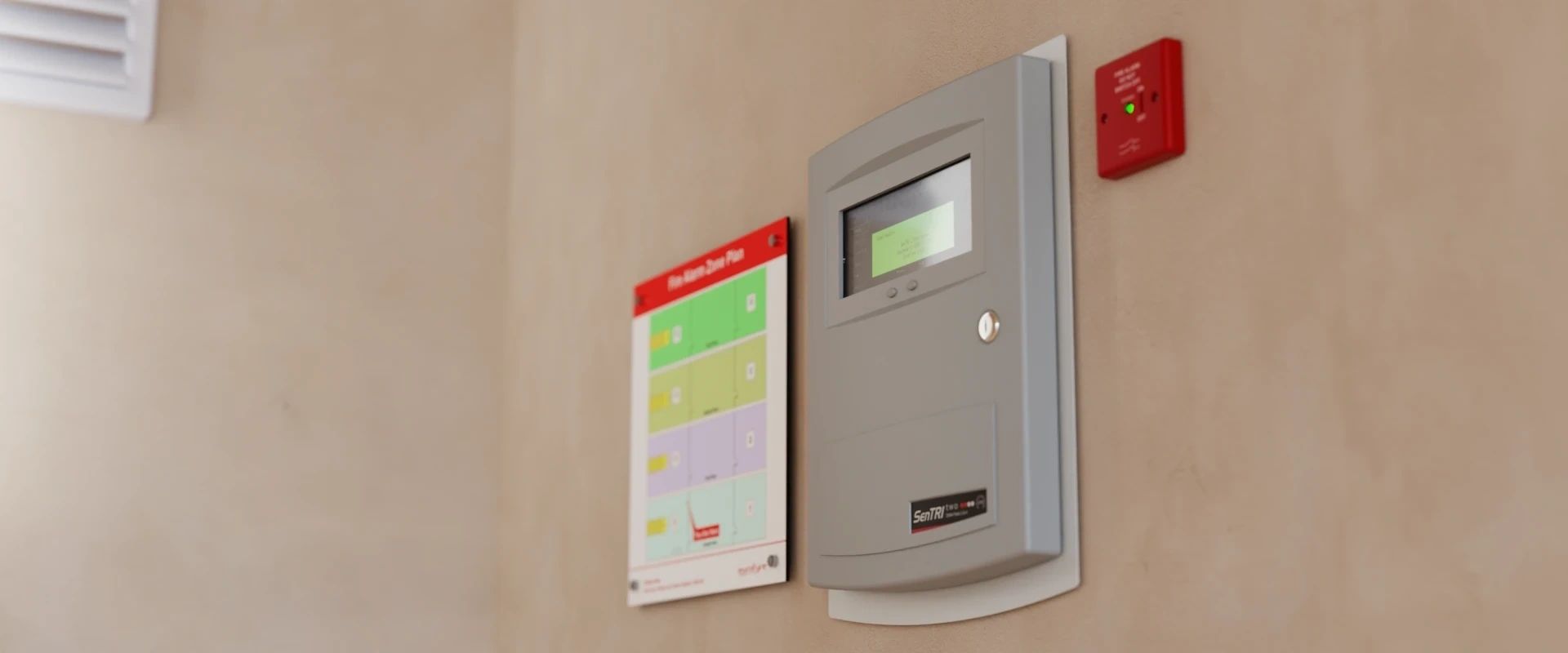
- Are fire detection and warning systems adequate for the premises and its occupants?
- Are means of escape appropriate, clearly marked, and kept clear?
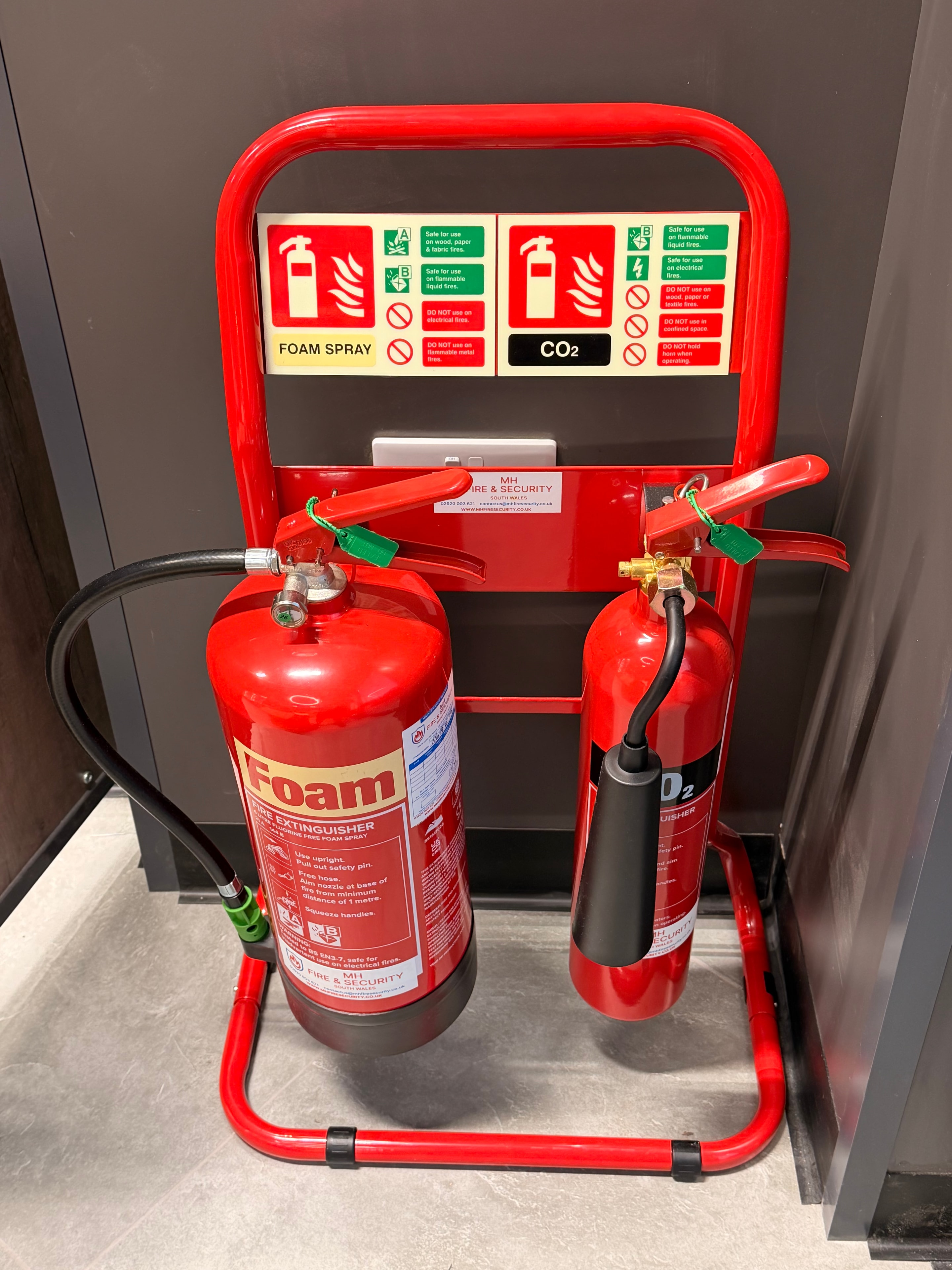
- Is firefighting equipment provided, correctly located, and maintained?
- Are emergency procedures documented and communicated to all staff?
4. Recording, Planning, and Training
- Are findings recorded and accessible?
- Is there a written emergency plan?
- Have staff received adequate fire safety training?
- Are fire drills carried out at appropriate intervals?
5. Reviewing and Updating
A fire risk assessment is not a one-off exercise. It must be reviewed regularly and updated whenever there is a significant change — a change in occupancy, a building alteration, a change in the activities carried out on the premises, or following a fire or near miss.
Who Can Carry Out a Fire Risk Assessment?
The RRO 2005 requires the assessment to be carried out by a competent person — someone with sufficient training, experience, and knowledge to identify fire hazards and evaluate risk accurately.
For straightforward, low-risk premises, a competent and well-informed responsible person may be able to carry out the assessment themselves. However, for most commercial premises — particularly those with complex layouts, high occupancy, vulnerable people, or significant fire loads — a professional fire risk assessor is strongly recommended.
An inadequate or superficial assessment is not a defence against enforcement action. If a fire occurs and the assessment is found to have been insufficient, the consequences for the responsible person can be severe.
Using a professional assessor also provides documented evidence that you have taken your legal obligations seriously — which matters both to enforcement authorities and to your insurers.
The Consequences of Non-Compliance
Failure to carry out a suitable fire risk assessment — or failure to act on its findings — can result in:
Enforcement Action
Fire and Rescue Authorities have powers to inspect premises and enforce compliance with the RRO 2005. They can issue:
- Alterations notices — requiring you to notify the authority before making changes to the premises
- Enforcement notices — requiring specific fire safety improvements within a set timeframe
- Prohibition notices — restricting or prohibiting the use of premises where there is a serious risk to life
A prohibition notice can shut your business down immediately.
Criminal Prosecution
Serious or persistent breaches of the RRO 2005 can result in criminal prosecution. Penalties include unlimited fines and, in the most serious cases, imprisonment for up to two years.
Insurance Implications
Most commercial property and liability insurance policies require the policyholder to comply with all relevant fire safety legislation. A fire that occurs in premises without a current, adequate fire risk assessment may result in your insurer refusing to pay out — leaving you personally liable for the cost of damage, business interruption, and any third-party claims.
Civil Liability
If an employee, visitor, or member of the public is injured or killed in a fire on your premises, and it can be shown that an adequate fire risk assessment would have identified and addressed the hazard that caused the fire, you may face significant civil liability.
How Often Should a Fire Risk Assessment Be Reviewed?
There is no fixed statutory interval for review, but best practice — and the guidance issued by the Home Office — recommends reviewing your assessment:
- At least annually for most premises
- Immediately following any significant change to the premises, its use, or its occupancy
- Following any fire, near miss, or false alarm that reveals a gap in your fire safety arrangements
- When new information becomes available — for example, changes to relevant guidance or standards
A fire risk assessment that was carried out five years ago and has never been reviewed is unlikely to be considered suitable and sufficient by an enforcement authority.
Fire Risk Assessments and Your Fire Alarm System
A fire risk assessment and a fire alarm system are closely linked. The assessment determines what level of fire detection and warning is appropriate for your premises — the type of system, the grade, the category, and the coverage required.
Under BS 5839-1, the standard for fire detection and alarm systems in non-domestic premises, the design of a fire alarm system should be based on the findings of a fire risk assessment. A system that was installed without reference to a current assessment may not provide adequate protection — and may not meet your legal obligations.
This is why fire risk assessments and fire alarm maintenance go hand in hand. If your assessment identifies that your current system is inadequate, or if a change in your premises means the existing system no longer provides appropriate coverage, the system needs to be reviewed and updated accordingly.
What About Houses in Multiple Occupation and Landlords?
The RRO 2005 applies to the common parts of Houses in Multiple Occupation (HMOs), blocks of flats, and other residential buildings with common areas. Landlords and managing agents of such properties have the same legal obligations as commercial occupiers in respect of those common areas.
For individual residential tenancies, fire safety obligations are governed by separate legislation — but the principle of identifying and managing fire risk applies equally.
MH Fire & Security: Fire Risk Assessments Across Cardiff & South Wales
MH Fire & Security provides professional fire risk assessments for businesses across Cardiff, Penarth, Barry, Newport, Bridgend, and the wider South Wales region. Our assessors are experienced in a wide range of premises types — from small commercial offices to large industrial facilities — and will provide you with a clear, actionable report that meets the requirements of the RRO 2005.
We also offer fire alarm installation, maintenance, and servicing to BS 5839-1, so if your assessment identifies gaps in your fire detection provision, we can address them directly.
If you are unsure whether your current fire risk assessment is adequate — or if you do not have one in place — contact us today for a no-obligation discussion.
Explore Topics
Written by
MH Fire & Security
Content creator and writer sharing insights and stories.