Why Every Business Needs Fire Extinguishers — and Why Maintenance Matters
Fire extinguishers are a legal requirement for most UK businesses. Here is what the law says, which types you need, and why professional installation and annual servicing by BAFE-qualified engineers is essential.
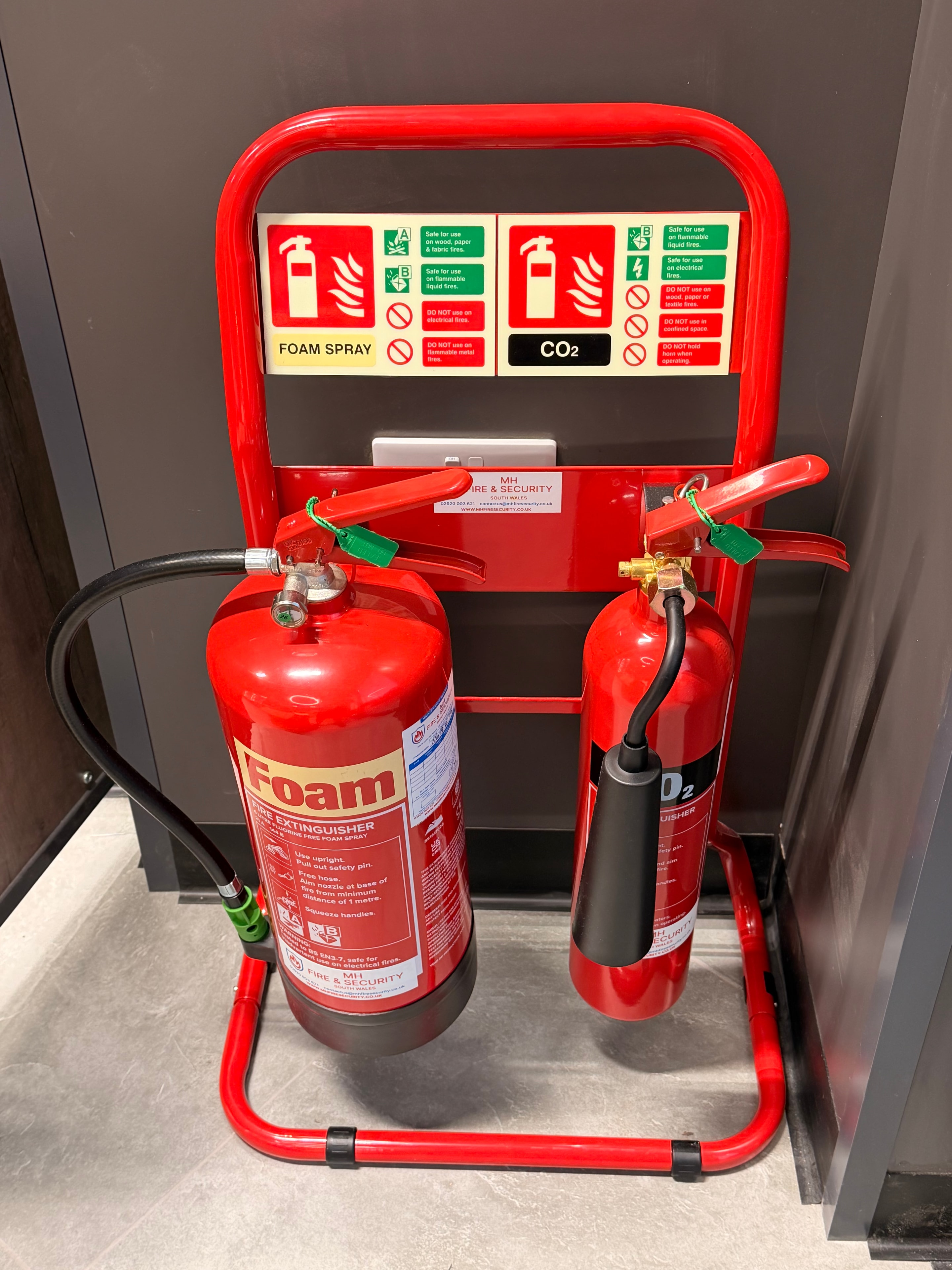
A fire extinguisher is one of the most visible pieces of fire safety equipment in any workplace — and one of the most overlooked. Many businesses have extinguishers on the wall because they have always been there, without any clear understanding of whether they are the right type, correctly positioned, or still fit for purpose.
That is a problem. An extinguisher that is out of service, incorrectly specified, or used on the wrong class of fire can make a situation significantly worse. And a business that cannot demonstrate its extinguishers have been properly maintained is exposed to serious legal and insurance risk.
In this guide, we explain the legal requirements for fire extinguishers in UK businesses, the different types available, and why professional installation and annual servicing by BAFE-qualified engineers matters.
Are Fire Extinguishers a Legal Requirement?
Yes — for the vast majority of business premises.
The Regulatory Reform (Fire Safety) Order 2005 (RRO 2005) requires the Responsible Person for any non-domestic premises to provide appropriate firefighting equipment. In practice, this means portable fire extinguishers in almost all cases. The specific requirement is that extinguishers must be:
- Suitable for the risks present on the premises
- Sufficient in number for the size and layout of the building
- Correctly positioned so they are accessible and visible
- Properly maintained so they are ready for use at all times
The RRO 2005 does not specify extinguisher types or quantities in detail — that is determined by your fire risk assessment, which should identify the fire hazards present and specify the appropriate firefighting provision. This is why fire extinguishers and fire risk assessments go hand in hand.
The Relevant Standards: BS 5306
The British Standard governing fire extinguishers in the UK is BS 5306, which covers:
- BS 5306-3 — Commissioning and maintenance of portable fire extinguishers
- BS 5306-8 — Selection and positioning of portable fire extinguishers
These standards set out the requirements for how extinguishers should be selected, installed, and serviced. They are the benchmark against which your provision will be assessed by fire enforcement authorities and insurers.
Compliance with BS 5306 is not just best practice — it is the standard your fire risk assessment should reference, and the standard your maintenance provider should be working to.
Types of Fire Extinguisher and When to Use Them
Not all fires are the same, and using the wrong extinguisher on the wrong class of fire can be dangerous. UK fire extinguishers are colour-coded and rated for specific fire classes:
Water (Red)
For Class A fires — solid combustibles such as wood, paper, textiles, and furniture. The most common type for general office and retail environments. Never use on electrical fires or flammable liquids.
Foam (Cream)
For Class A and Class B fires — solid combustibles and flammable liquids such as petrol, oils, and solvents. Suitable for premises where both types of risk are present. Not suitable for live electrical equipment.
CO₂ (Black)
For Class B fires and electrical equipment. CO₂ leaves no residue, making it the preferred choice for server rooms, offices with significant electrical equipment, and anywhere that residue damage would be a concern. Not suitable for Class A fires.
Dry Powder (Blue)
For Class A, B, and C fires — including flammable gases. Versatile but leaves a significant residue that can damage equipment and is difficult to clean. Generally recommended for industrial and outdoor environments rather than offices or retail premises.
Wet Chemical (Yellow)
Specifically designed for Class F fires — cooking oils and fats. Essential for commercial kitchens. Standard water or foam extinguishers are ineffective and potentially dangerous on deep-fat fryer fires.
Water Mist (White)
A newer technology suitable for Class A, B, and C fires, and safe for use near electrical equipment. Increasingly specified for healthcare, hospitality, and mixed-use environments.
How Many Extinguishers Does Your Business Need?
The number and placement of extinguishers is determined by your fire risk assessment, but BS 5306-8 provides the baseline guidance:
- A minimum of two Class A extinguishers per floor for most premises
- One extinguisher per 200 square metres of floor area (with a minimum of two per floor)
- Additional specialist extinguishers where specific risks are identified — CO₂ near electrical equipment, wet chemical in kitchens, and so on
- Extinguishers positioned so that no person has to travel more than 30 metres to reach one
These are minimum requirements. Higher-risk premises — those with significant fire loads, complex layouts, or vulnerable occupants — will typically require more.
Annual Servicing: Why It Is Not Optional
An extinguisher that has not been serviced may look perfectly functional on the wall. It may not be. Pressure can drop over time, seals can degrade, and the extinguishing agent can settle or deteriorate. An extinguisher that fails to discharge when needed is worse than useless — it gives a false sense of security and wastes critical seconds.
Under BS 5306-3, portable fire extinguishers must be serviced:
- Annually — a full inspection and service by a competent person, with a service label attached confirming the date and the engineer's details
- Extended service — at intervals specified by the manufacturer (typically every five years for most types), involving more detailed internal inspection
- Overhaul or replacement — at the end of the extinguisher's service life
The RRO 2005 requires that firefighting equipment is maintained in efficient working order. An extinguisher without a current service label is not demonstrably maintained — and in the event of a fire, an enforcement authority or insurer will look for that evidence.
What Is BAFE and Why Does It Matter?
BAFE (British Approvals for Fire Equipment) is an independent third-party certification scheme for fire protection companies and engineers. BAFE registration demonstrates that a company has been assessed against recognised industry standards and that its engineers are competent to carry out the work they are engaged to do.
For fire extinguisher servicing, the relevant BAFE scheme is SP101 — the scheme for the maintenance of portable fire extinguishers. Companies registered under SP101 have demonstrated that they:
- Employ engineers with the appropriate qualifications and training
- Follow BS 5306-3 in their servicing procedures
- Operate quality management systems that ensure consistent, documented service delivery
- Are subject to ongoing third-party audit and assessment
Choosing a BAFE-registered company for your extinguisher servicing is not just about quality assurance — it is about being able to demonstrate to your insurer and to fire enforcement authorities that your maintenance has been carried out by a competent, independently verified provider.
MH Fire & Security engineers are BAFE qualified, and all extinguisher installations and services are carried out to BS 5306. Every service is documented, with a service label applied to each extinguisher and a written service record provided to you.
The Consequences of Getting It Wrong
Enforcement Action
Fire and Rescue Authorities can inspect your premises and issue enforcement notices requiring you to address inadequate firefighting provision. In serious cases, a prohibition notice can restrict or close your premises.
Insurance
Most commercial property and liability policies require compliance with fire safety legislation and relevant British Standards. Extinguishers that have not been serviced, or that are of the wrong type for the risks present, can give an insurer grounds to reduce or refuse a claim following a fire.
Personal Liability
If a fire causes injury or death on your premises and it can be shown that adequate, properly maintained firefighting equipment would have made a difference, the Responsible Person may face criminal prosecution and civil liability.
Common Mistakes Businesses Make
Using the wrong type. A CO₂ extinguisher in a warehouse full of cardboard, or a water extinguisher next to an electrical switchboard, is not just ineffective — it can be dangerous.
Not enough extinguishers. A single extinguisher by the front door does not meet the requirements for most commercial premises.
Extinguishers that have never been serviced. If there is no service label, or the label is years out of date, the extinguisher cannot be relied upon.
Extinguishers that are inaccessible. Blocked by stock, stored in a cupboard, or positioned where staff cannot reach them quickly — all common findings on inspection.
Staff who don't know how to use them. Extinguishers should be part of your fire safety training programme. Staff should know which type to use, when to use it, and — critically — when to leave the building rather than attempt to fight the fire.
MH Fire & Security: Supply, Installation & Maintenance Across Cardiff & South Wales
MH Fire & Security supply, install, and maintain portable fire extinguishers for businesses across Cardiff, Penarth, Barry, Newport, Bridgend, and the wider South Wales region. Our BAFE-qualified engineers carry out all work to BS 5306, and every service is fully documented.
We can advise on the correct types and quantities for your premises based on your fire risk assessment, ensure extinguishers are correctly positioned and mounted, and set up an annual service programme so your provision stays compliant year on year.
If you are unsure whether your current extinguishers are the right type, correctly positioned, or due for service — get in touch for a no-obligation assessment.
Explore Topics
Written by
MH Fire & Security
Content creator and writer sharing insights and stories.